Corporate Banking Re-DesigN
CASE STUDY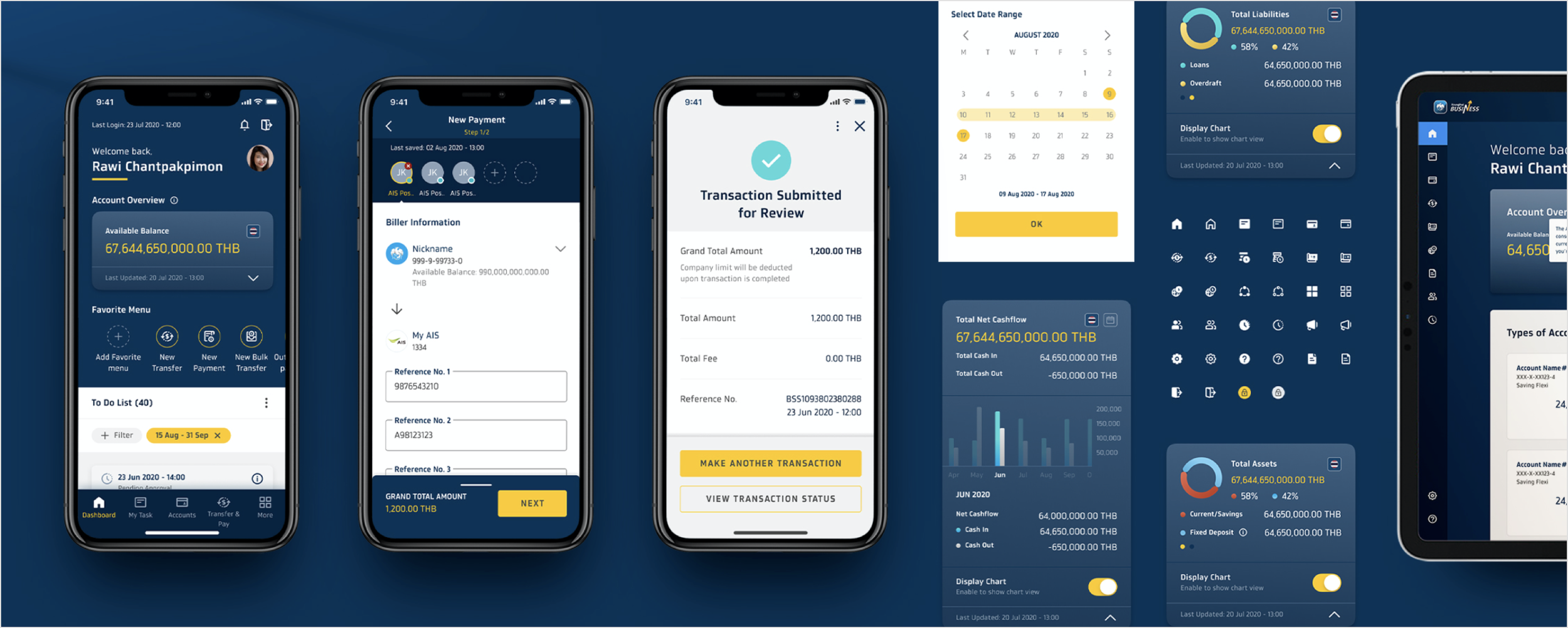
Redefining corporate banking by aligning teams, systems, and scale across one of Thailand’s largest financial institutions
INTRODUCTION
In 2020, one of the largest banks in Thailand undertook a major initiative to reimagine its corporate banking experience for large enterprises and government institutions. The ambition was not limited to visual modernisation. The organisation needed to simplify highly complex workflows, align multiple internal and external teams, and establish a scalable design foundation that could support future phases of transformation.
Over a 10-month Phase 1 engagement, I led a medium-sized, distributed design team to redefine how corporations manage critical financial operations across mobile and web. The outcome was a unified corporate banking experience across mobile and web, supported by stronger collaboration, clearer ownership, and a system built to scale.
I served as Design Lead, responsible for design direction, people management, and the overall coordination of design delivery. This included managing a team of more than seven designers, working closely with business analysts, product owners, and development teams to ensure alignment throughout Phase 1
Accenture + Thai Banking Institution
Client
Product Design Lead
Role
2020
Year
Services
Product Design, Project Management
GOALS
Establish a scalable foundation for corporate bankinG
Create a unified design and interaction foundation that could support complex enterprise and government banking needs while remaining flexible enough to scale across future phases. This included defining patterns and standards that both designers and developers could rely on to deliver consistently.
Simplify complex enterprise workflows
Reduce friction across high-risk, multi-step banking tasks by identifying unnecessary steps, clarifying system feedback, and aligning flows with how corporate users actually operate. The goal was to make complex actions predictable and easier to execute.
Align design, product, and engineering teams
Create a shared understanding of user needs, priorities, and constraints so that design decisions, product requirements, and technical implementation were aligned from the outset. This reduced rework and improved delivery confidence.
Elevate design as a strategic partner
Position design as a leadership function that influenced product direction and delivery strategy, rather than operating solely as a production layer.

4,000+
Web and mobile screens designed using a scalable DLS.
9 DEsigners
A core team for UX/UI Design, Copywriters, etc.
10 months
Duration for Phase 1 to set the foundation for the future phases.
Set direction early to enable confident delivery
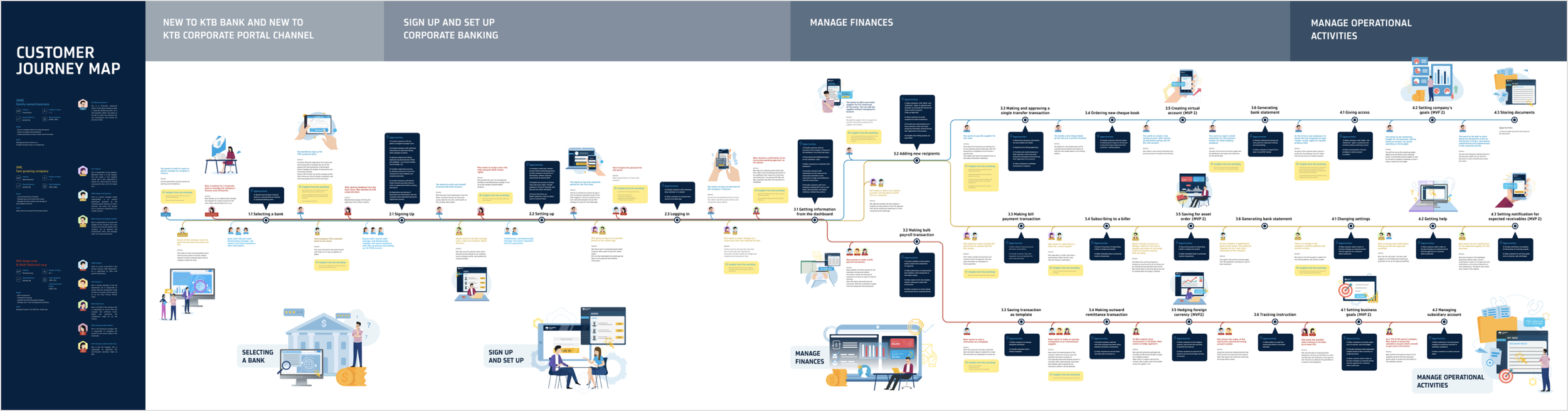
The project began with a focused discovery phase designed to challenge inherited assumptions and establish a shared understanding across stakeholders. Design thinking workshops were facilitated to revisit problem definitions, surface discrepancies between business expectations and real user behaviour, and define hypotheses that could be tested with users.
This early alignment was critical in gaining buy-in from both business and engineering teams, ensuring that design direction was grounded in evidence and feasibility.
Scale delivery through clear ownership and structure
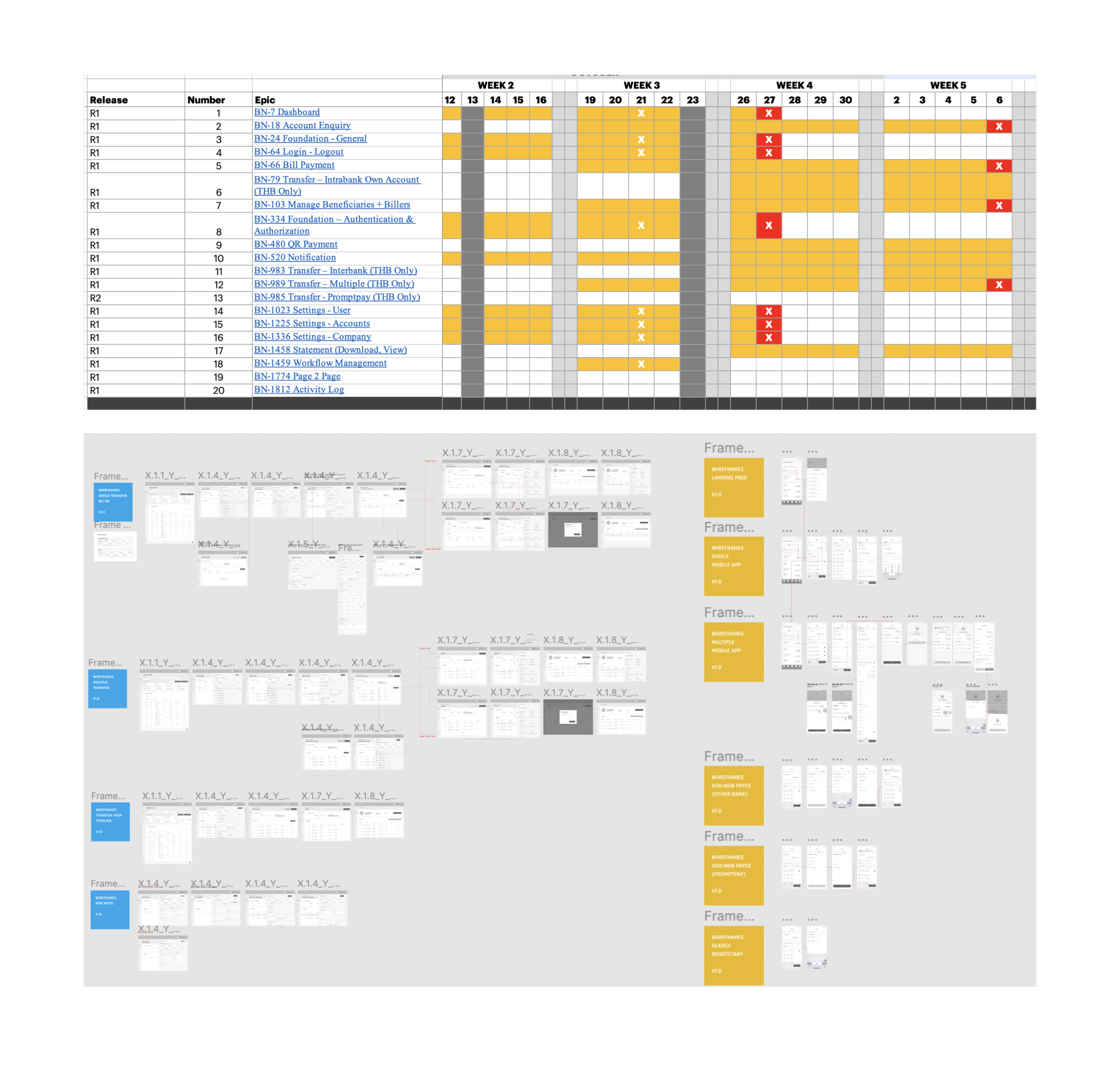
Given the size of the transformation, the work was broken down into epics. Each epic was owned by a designer working closely with a dedicated business analyst and supported by developers. This structure created clear ownership, reduced bottlenecks, and enabled parallel delivery without losing alignment.
Progress, priorities, and sign-offs were documented in Confluence, creating transparency across design, product, and engineering teams. This created a shared understanding of user needs, priorities, and constraints so that design decisions, product requirements, and technical implementation were aligned from the outset. This reduced rework and improved delivery confidence.
Build systems alongside product delivery
A design system was developed in parallel with feature design rather than treated as a separate initiative. This allowed designers and developers to align early on components, interaction patterns, and states, reducing ambiguity during build and supporting consistency across platforms.
Designers worked closely with developers and business analysts throughout the process, reviewing technical feasibility, discussing effort trade-offs, and adapting solutions where necessary. This collaboration ensured that design intent was maintained while respecting technical constraints and delivery timelines.
APPROACH
Defining the problem and aligning on direction
1
Gathering insight through feedback, workshops, and collaboration
2
3
Designing and implementing at scale
Delivering impact and enabling future phases
4
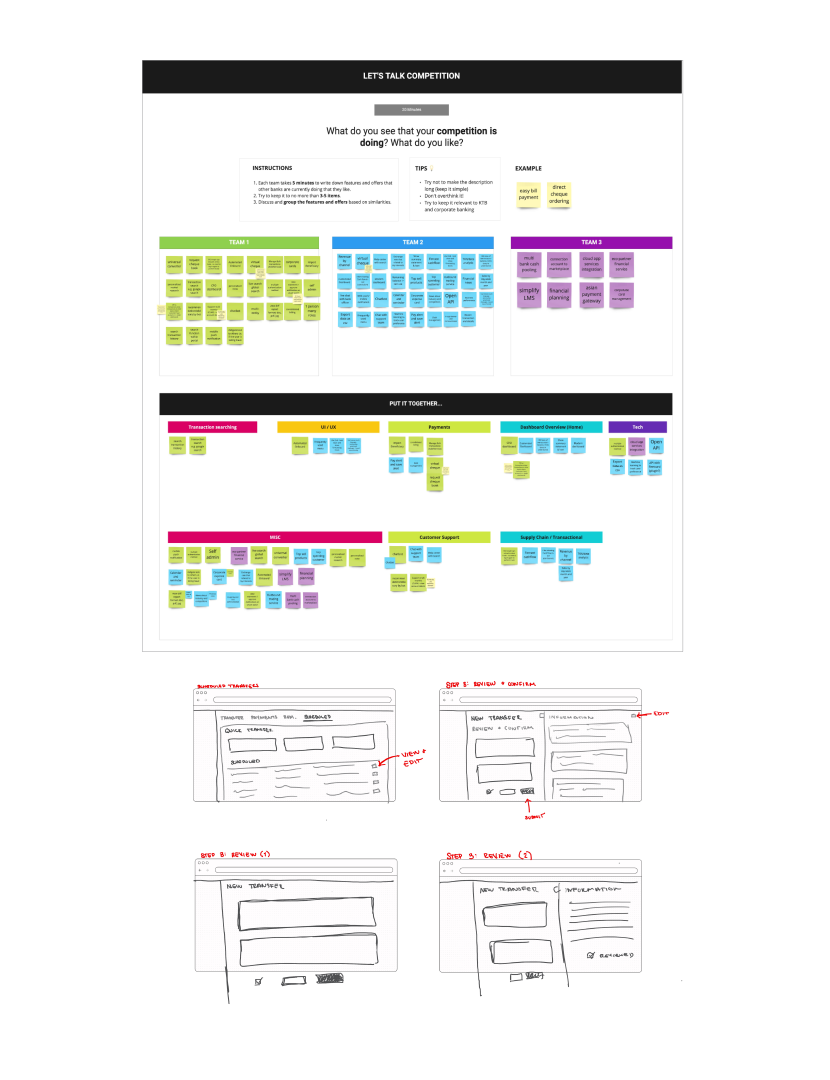
Defining the problem and aligning on direction
The first step focused on clearly framing the problem space and aligning all teams around a shared direction. Corporate banking workflows had evolved through a combination of regulatory requirements, legacy systems, and incremental feature additions. This resulted in experiences that were functional but increasingly complex and difficult to scale.
Framing involved working closely with stakeholders, business analysts, and engineering teams to define the scope for Phase 1, clarify constraints, and agree on success criteria. This step ensured that design decisions were grounded in both business reality and technical feasibility, while keeping user needs at the centre of the work.
By establishing this clarity early, the team was able to move forward with confidence and avoid misalignment as delivery accelerated.
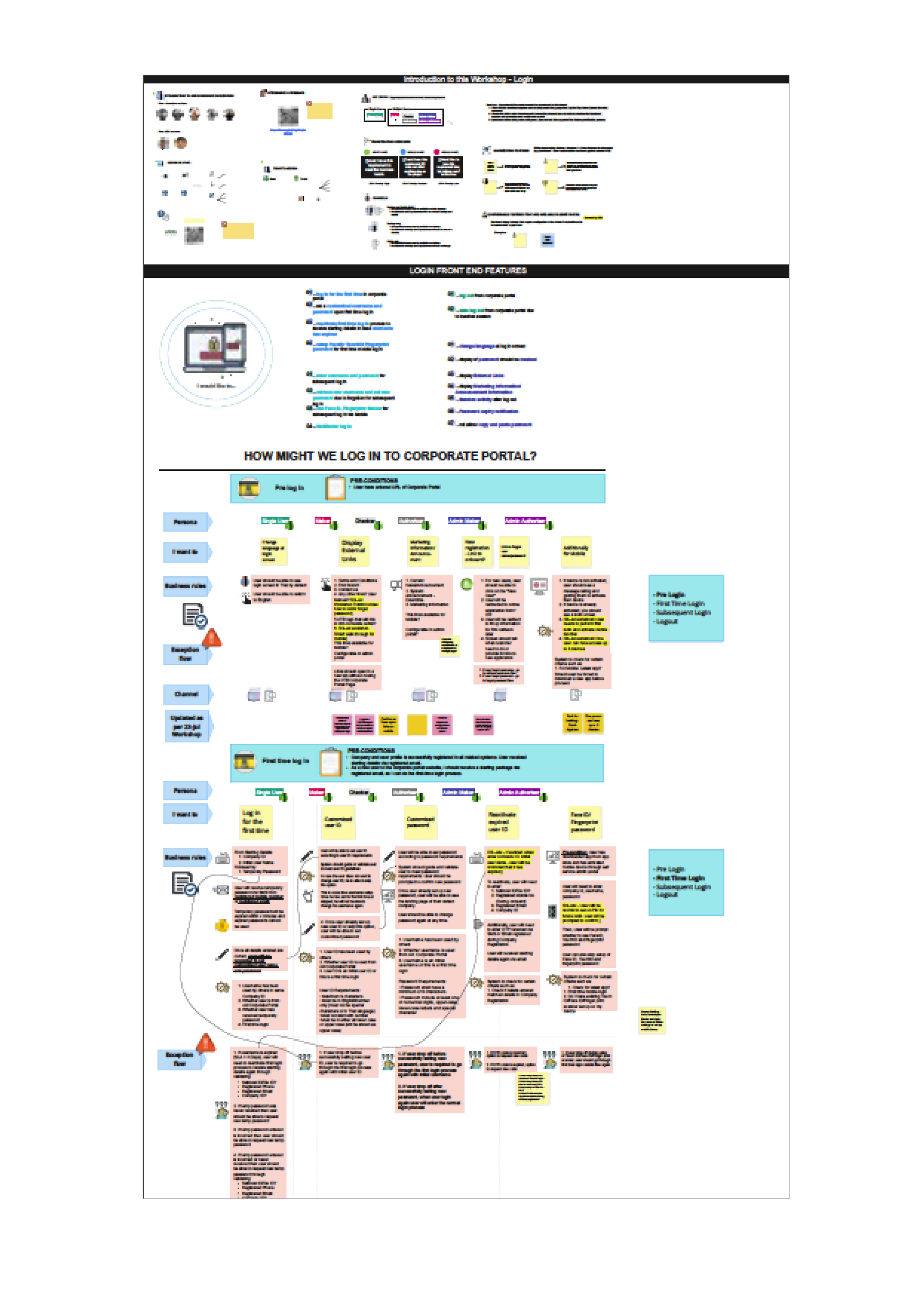
Gathering insight through feedback, workshops, and collaboration
Observation focused on building a deep understanding of existing pain points and opportunities before implementation began. This was done by reviewing prior client feedback, analysing existing research, and running collaborative workshops with business analysts and key stakeholders.
These workshops helped unpack discrepancies between intended workflows and real user behaviour. They also created a shared space for design, product, and business teams to discuss trade-offs, assumptions, and dependencies. Rather than relying on isolated research artifacts, insight was built collaboratively and translated directly into actionable design inputs.
This step ensured that design solutions were informed by real operational challenges and aligned with business priorities from the outset.
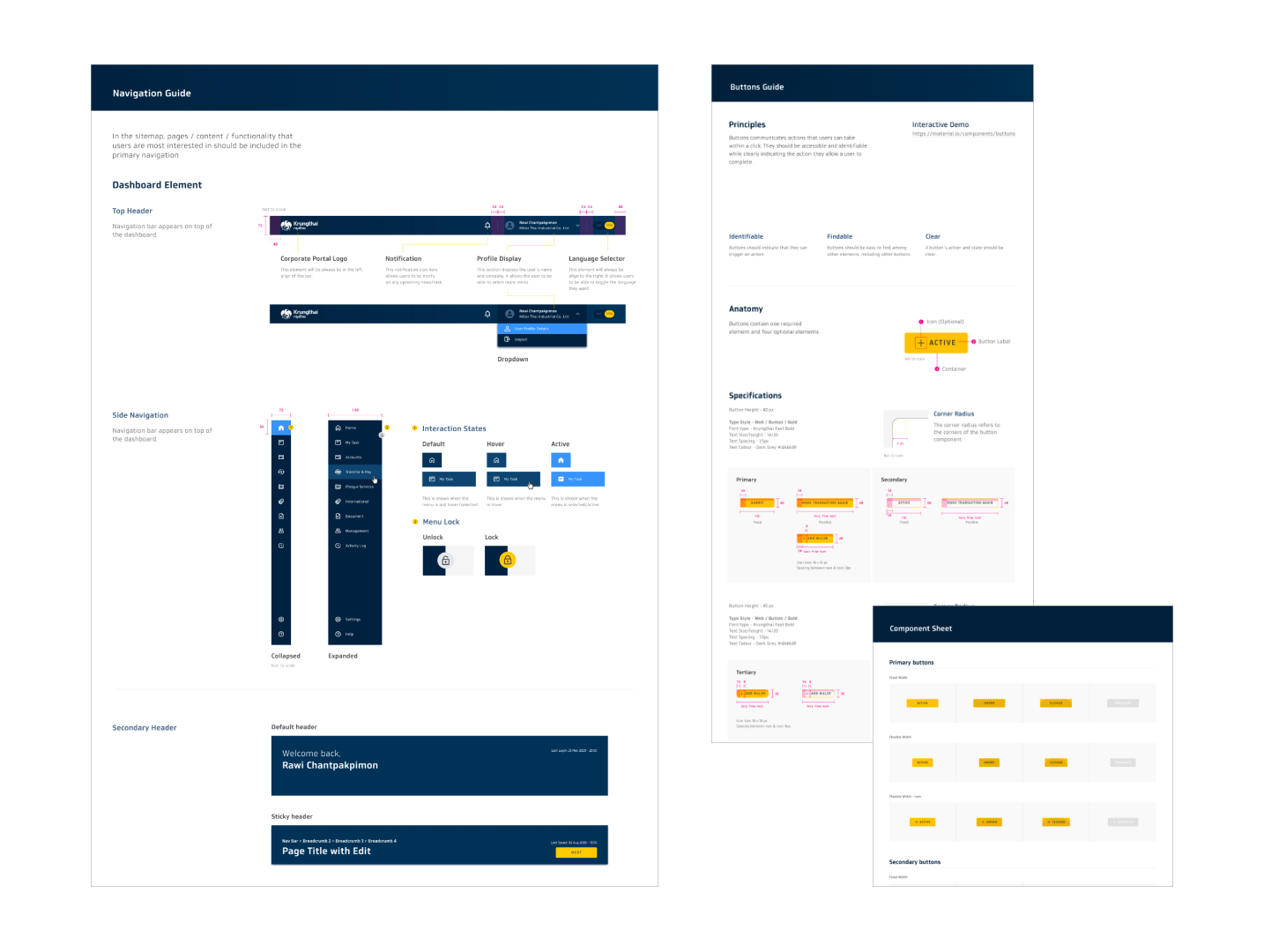
Designing and implementing at scale
With a clear problem definition and validated insights, the team moved into design and implementation. Work was structured around epics, with designers owning specific areas alongside business analysts and collaborating closely with developers.
Design concepts progressed from sketches and wireframes into high-fidelity designs, supported by a design system developed in parallel. This enabled consistent implementation across web and mobile while reducing ambiguity for development teams.
Throughout this phase, designers and developers worked hand in hand to review feasibility, refine interactions, and adapt solutions where necessary. This close collaboration ensured that design intent was maintained while respecting technical constraints and delivery timelines.
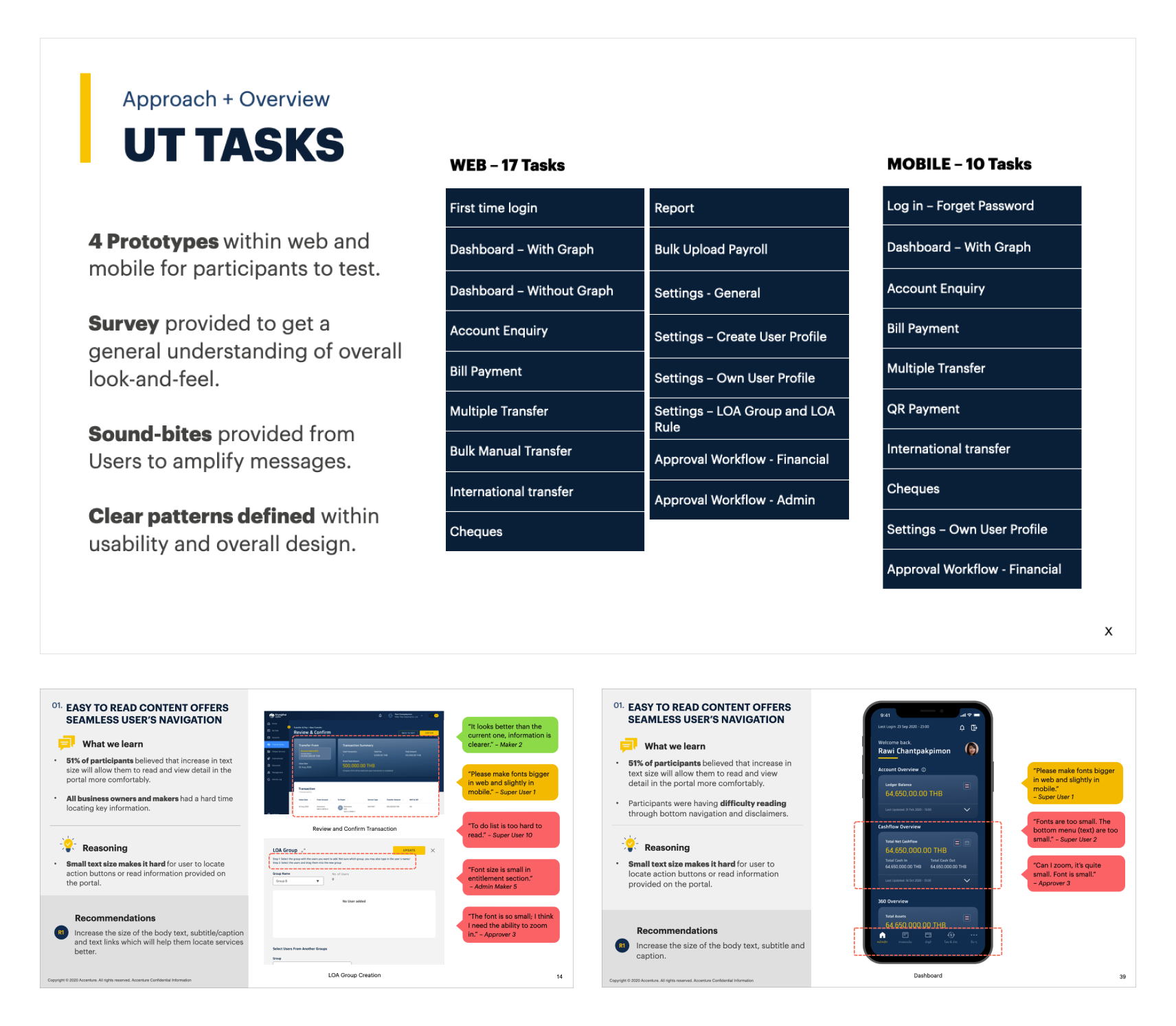
Delivering impact and enabling future phases
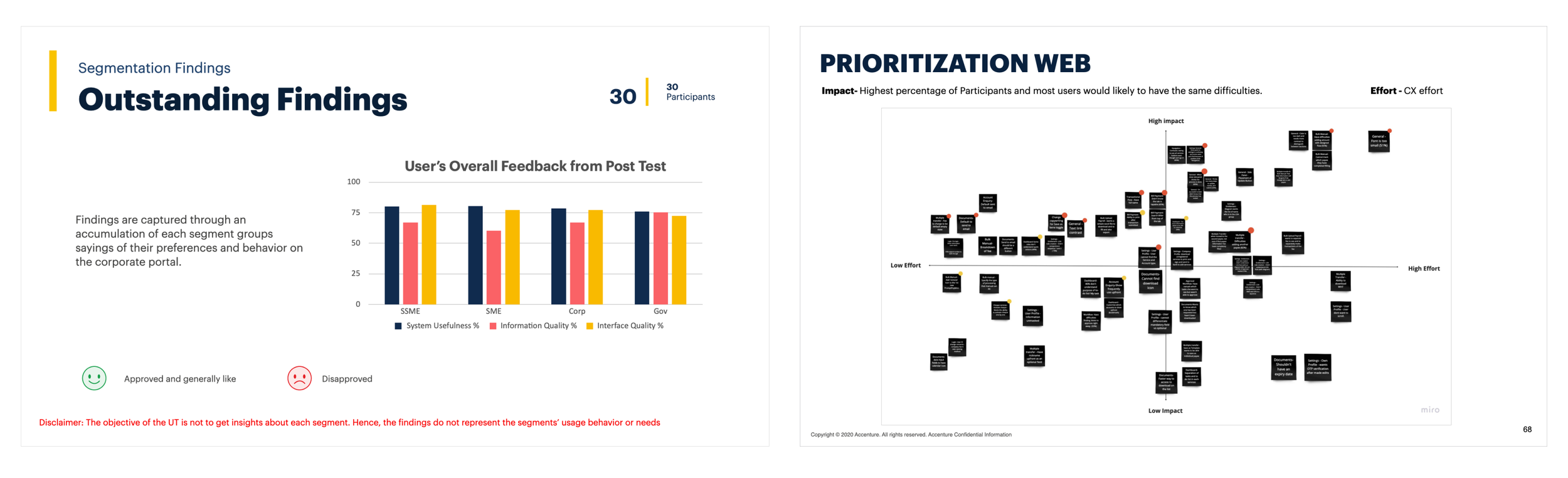
Iteration took place toward the end of Phase 1, once core workflows and system foundations were implemented. Usability testing was conducted to validate ease of use, clarity, and overall satisfaction with the platform before progressing into Phase 2.
The results confirmed that the design direction was effective, with 74.7% overall satisfaction and 81% of participants satisfied with how easy the system was to use. Feedback highlighted minor improvements related to terminology, interaction feedback, and clarity, rather than structural issues.
These insights informed targeted refinements that could be addressed without disrupting delivery. More importantly, they shaped the Phase 2 backlog, allowing future work to be prioritised based on validated user needs and effort.
Iteration at this stage ensured that Phase 1 closed with confidence, supported by evidence, and that Phase 2 could begin on a strong, user-validated foundation.
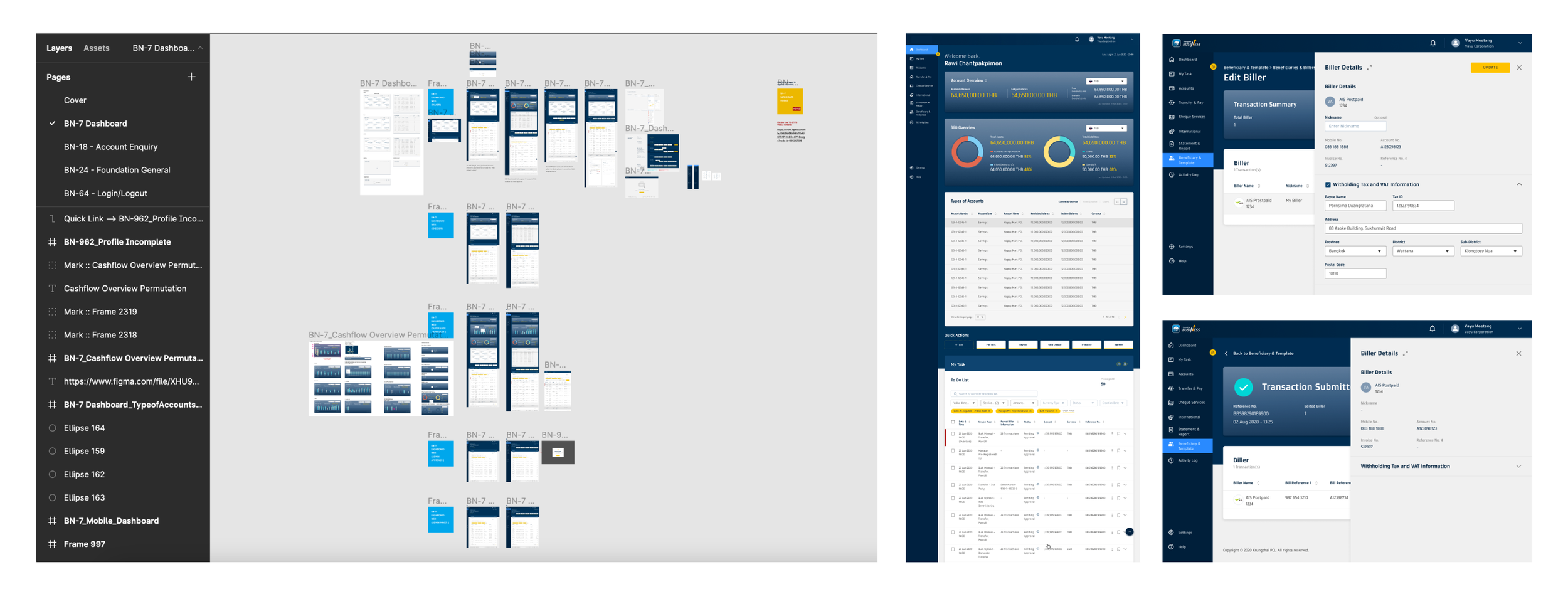
The redesigned platform reduced complexity across critical corporate banking workflows, enabling users to complete tasks with greater clarity and confidence.
A unified interaction and visual language across web and mobile improved consistency and reduced cognitive load.
The design system supported faster delivery, clearer handover to development, and long-term maintainability.
Cross-functional collaboration between design, product, and engineering improved significantly, creating a more sustainable and repeatable delivery model.
OUTCOMES & IMPACT
4.3 ⭐️
4.3 out of 5 rating for the mobile application.
74.7%
Satisfaction rating during testing among users.
81%
Of participants felt comfortable using this system,